CGC Ultralight Drywall Problems: Paper Blistering and Ceiling Droops After Priming
Lawrence Winterburn August 29, 2026CGC Canadian Gypsum Company ultralight drywall issues: after priming, paper blisters bubbled across our cathedral ceiling. Here’s what went wrong, what it cost, and how to avoid it.
TL;DR
The Challenge: CGC Canadian Gypsum Company ultralight drywall issues showed up the moment we started priming: paper blisters bubbled across a 500 square foot cathedral ceiling that should have been regular board, not Ultralight. I ordered regular drywall from our local yard in Elmvale, but what arrived was CGC Ultralight instead, a product I don’t use on ceilings.
The Solution: I called the local CGC rep, who asked for the batch numbers printed on the back of the boards. He told me CGC had an issue with overcooked drywall a few months earlier and expected this may have been leftover material from that batch.
The Twist: My friend at the yard assured me everyone uses Ultralight and there are no issues. Lemmings… Cliff.
Key Takeaway: Sometimes experience is important and valuable, but in this case it worked against me. I ordered regular drywall for a reason, and I questioned the substitution the day it showed up. I should have sent it back.
How We Got Here
I’ve installed and finished plenty of drywall over my four decade career, and I have done research on heating, insulation and thermal mass. I ordered regular drywall for a reason. My friend at the yard assured me that everyone uses Ultralight, and there are no issues. Lemmings… Cliff.
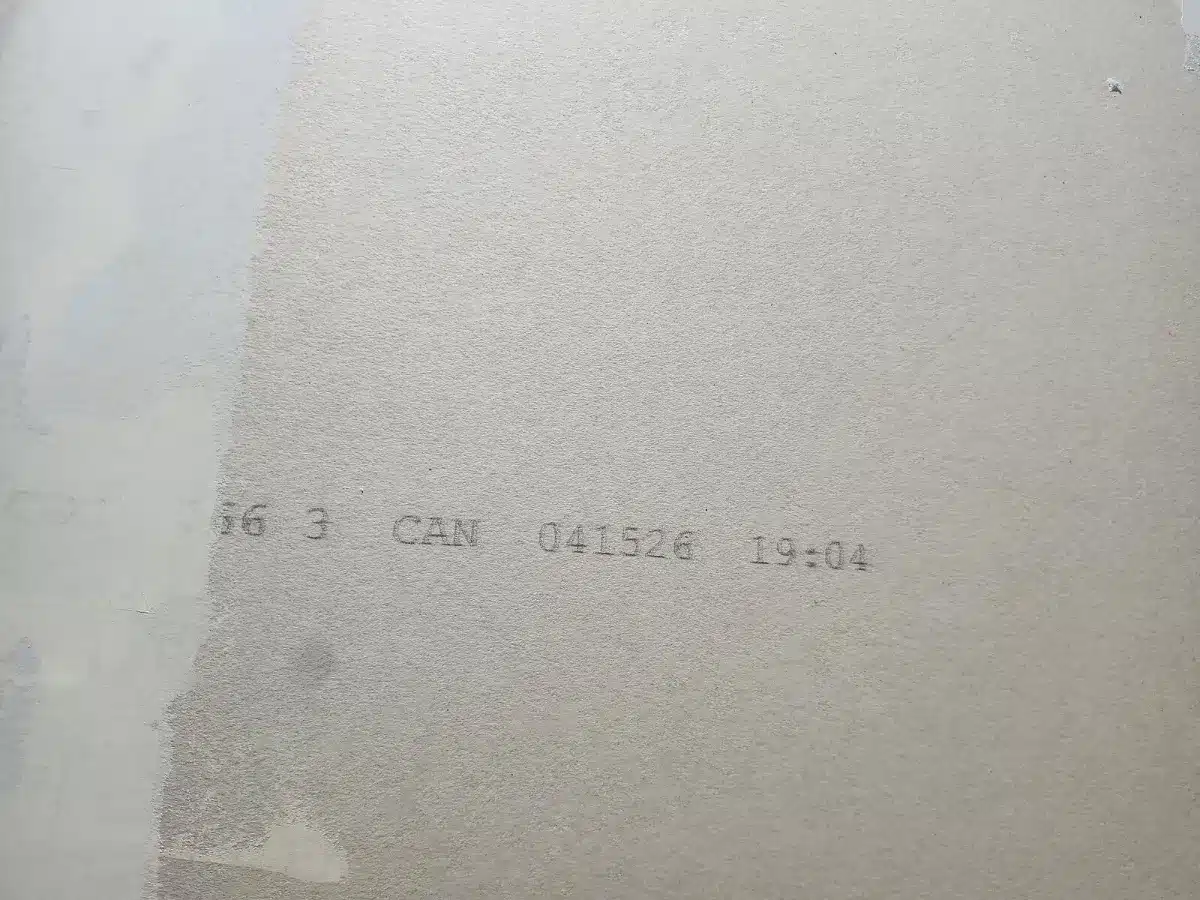
After speaking to the local CGC rep on the phone, he asked for the batch numbers printed on the drywall. They had an issue with overcooked drywall a few months ago, and he expected that this may have been material left from that batch.
CGC’s own product line backs up why I specify regular board on ceilings in the first place. A standard 4×8 sheet of 1/2″ drywall runs close to 60 lbs, while CGC Ultralight comes in around 40 to 41 lbs, roughly 25 to 30 percent lighter. That weight comes out of the gypsum core, which means less thermal mass and less sound-dampening performance, exactly the properties I was building for on this job.
Installing a Brittle Board
I am very careful installing board to hide inconsistencies in the framing. This was a very brittle board to work with. Like screwing eggshells to the ceiling. Every other screw was popping through the paper. The line between too far and not far enough limited my guys to using a drill, slowly setting the screws, rather than using a drywall gun. I was able to use the gun, but the pressure applied had to be more precise, and roughly 25 percent of screws blew through the boards.
Taping, Dimpling, and Drywall Turning to Powder
We taper the drywall at the end seams, and this time we found that it took screws every 2 or 3 inches, rather than every 6 inches, to tape the ends over our frames.
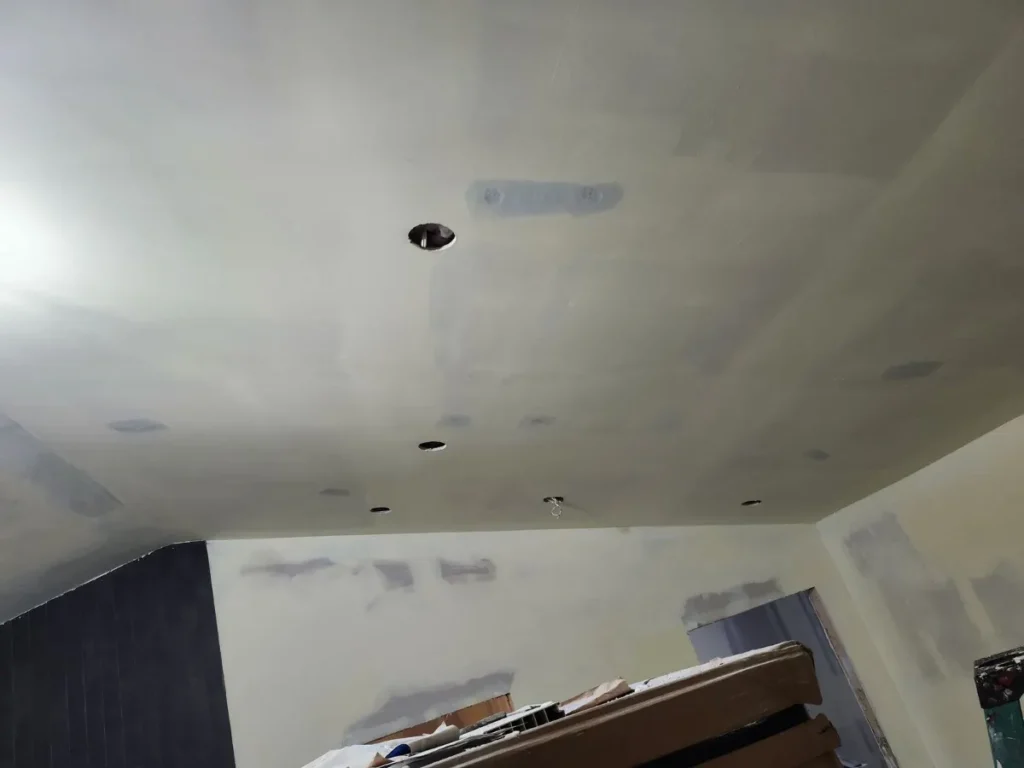
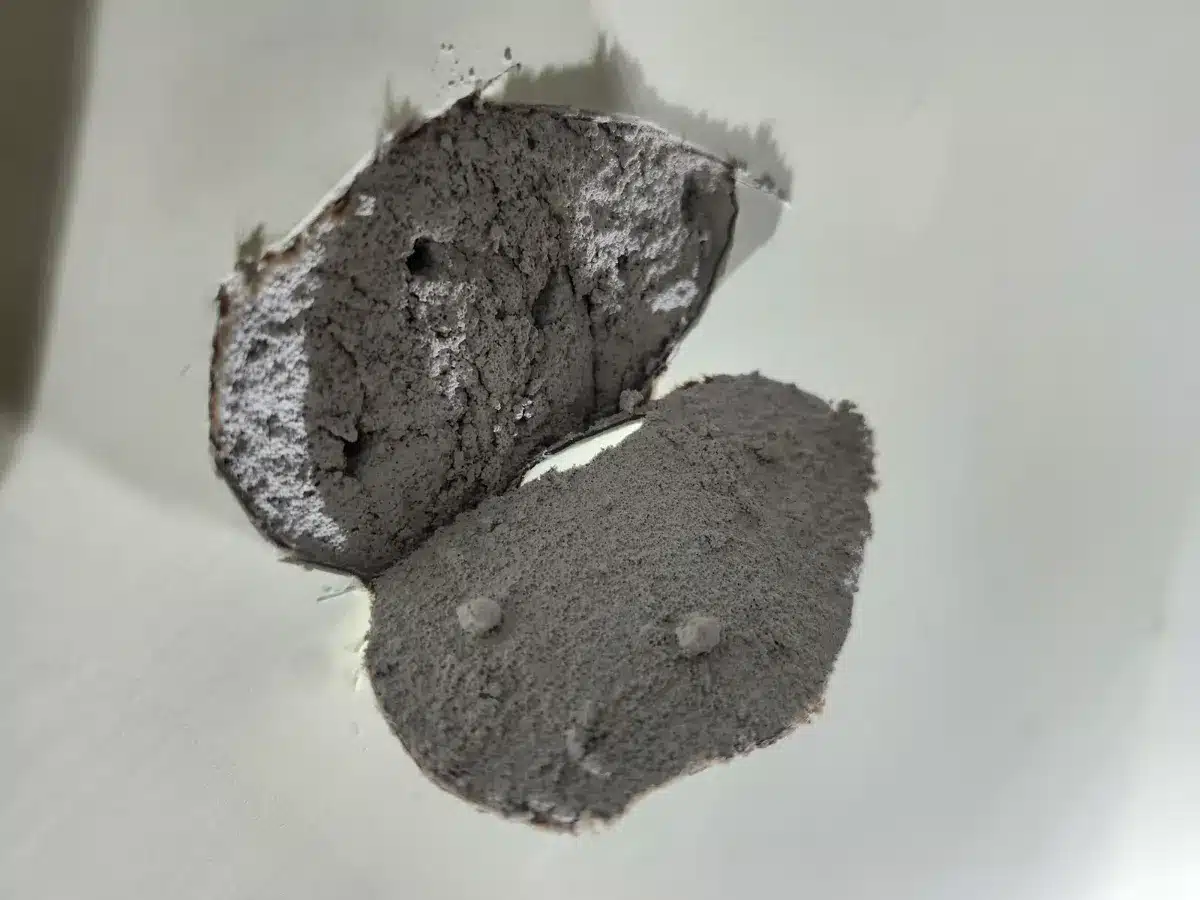
When you miss a screw, or send it in too far, you have to dimple the drywall in so the paper doesn’t show. The drywall was turning to powder as we tapped it with a hammer, which is standard protocol. On the images you can see where the missed screws were plastered.
When the Ceiling Started to Bubble
When the drywall shatters from setting dimples, and it gets wet from regular priming or skimming, the wet plaster or paint sags away from the ceiling. It’s like a bubble hanging from the ceiling, stretching the paper away from the surface of the drywall.
A Sponge for a Ceiling
The other issue was that the drywall soaked up moisture like a sponge. A regular sized roller could not get the thinned mud on the ceiling fast enough to finish. It was drying in 60 seconds, too fast to work. We used an 18 inch roller and a very large tray. Working quickly and applying 2 coats was the only way to get mud on the ceiling fast enough. Two people were required to do what one man should have been able to do.
What CGC Says About Priming
CGC recommends priming first. They unfortunately don’t recommend priming with a shellac based primer to prevent droops… a regular water based primer as they recommend will cause droops, just like skimming does.
“Heavy, water-based texturing materials may cause sag in gypsum panel ceilings under the following adverse conditions: high humidity, improper ventilation, panels applied parallel to framing and panels having insufficient thickness to span the distance between framing.” CGC also notes: “Application of a prime coat is to equalize the surface porosity and to provide a uniform color. Primers are not intended to reduce sag potential.”
Source: CGC Construction Handbook, Chapter 5: Finishing Drywall Systems
35 Droops on a 500 Square Foot Ceiling
On a 500 square foot cathedral ceiling we had 35 droops. These all had to be cut out, loose plaster scraped out, and filled with hot mud. Each patch had to be coated four times to hide the damage.
When I spoke to the CGC rep, Kristopher O’Connor, I had only found 12 or so sags. As I repaired the sags I found more smaller ones. Repairs stretched over three days. It is very difficult to see the sags before paint.
What This Actually Cost
When we initially talked, I suggested the repairs would likely cost $1,200. Defective materials and repairs due to that factor are something that needs to be covered by the company, not my clients. My total in repairing this mess, including phone calls and research (speaking to professional drywall and taping companies), the rep, and my lumber yard rep, has totalled 35 hours. The project was also delayed a week, which also matters.
Total cost of this event is $6,475 (35 hours at $180 per hour). Further, the painter will have to upcharge another $800 to use a special primer to stabilize the surface before painting. I expect a few more sags to show up after prime. That puts the total at $7,275.
Radio Silence
It’s been over a week now and I haven’t heard from Kristopher O’Connor. He had initially offered us some free mud, and said he would have to talk to his manager, but didn’t expect any financial compensation.
A Principle Issue, Not Just a Financial One
Defective drywall costs add up quickly. This is not just a financial issue, it is a principle issue. Every drywaller, taper and painter has seen these issues, and they just quietly deal with it. The company hears about it, evidenced by them knowing that they had a bad batch.
When we use PVC decking and there is an issue, the decking producer makes us whole. Drywall should be no different.
What Other Contractors Already Know
In my post event research I discovered that contractors are well aware of these issues and they have developed workarounds.
You cannot use Ultralight on 24 inch centers. It doesn’t have the strength to support itself. It will never be straight. CGC does make a ceiling version, but it has the same issue with sags.
High end contractors that will be skimming drywall use green board or 5/8 inch drywall instead.
If you’re on 16 inch centers, you can skim Ultralight if you use hot mud for the first fill. You may have extra patching to do if you missed any nail sets that weren’t obvious in the first coat.
You can use compound, but you will have to prime with a shellac based paint before skimming.
Final Thoughts
Sometimes, experience is important and valuable, but in this case, it worked against me. I ordered regular drywall for a reason, backed by four decades in this trade and my own research on thermal mass. When the yard swapped it for Ultralight without telling me, and my gut said to question it, I should have trusted that instinct and sent it back. Check your batch numbers, check your labels, and don’t assume “everyone uses it” means there’s no risk to your ceiling.