Commercial Restoration Design: Mad River Detailing LLC Winstead, Connecticut
Client: Mad River Detailing LLC
Location: 161 Meadow St, Winstead CT 06098
Project Type: Historic Commercial Restoration
Scope: Concept Design, Structural Asbuilts, Full Working Drawings
Deliverable: 23-sheet drawing package
What We Were Working With
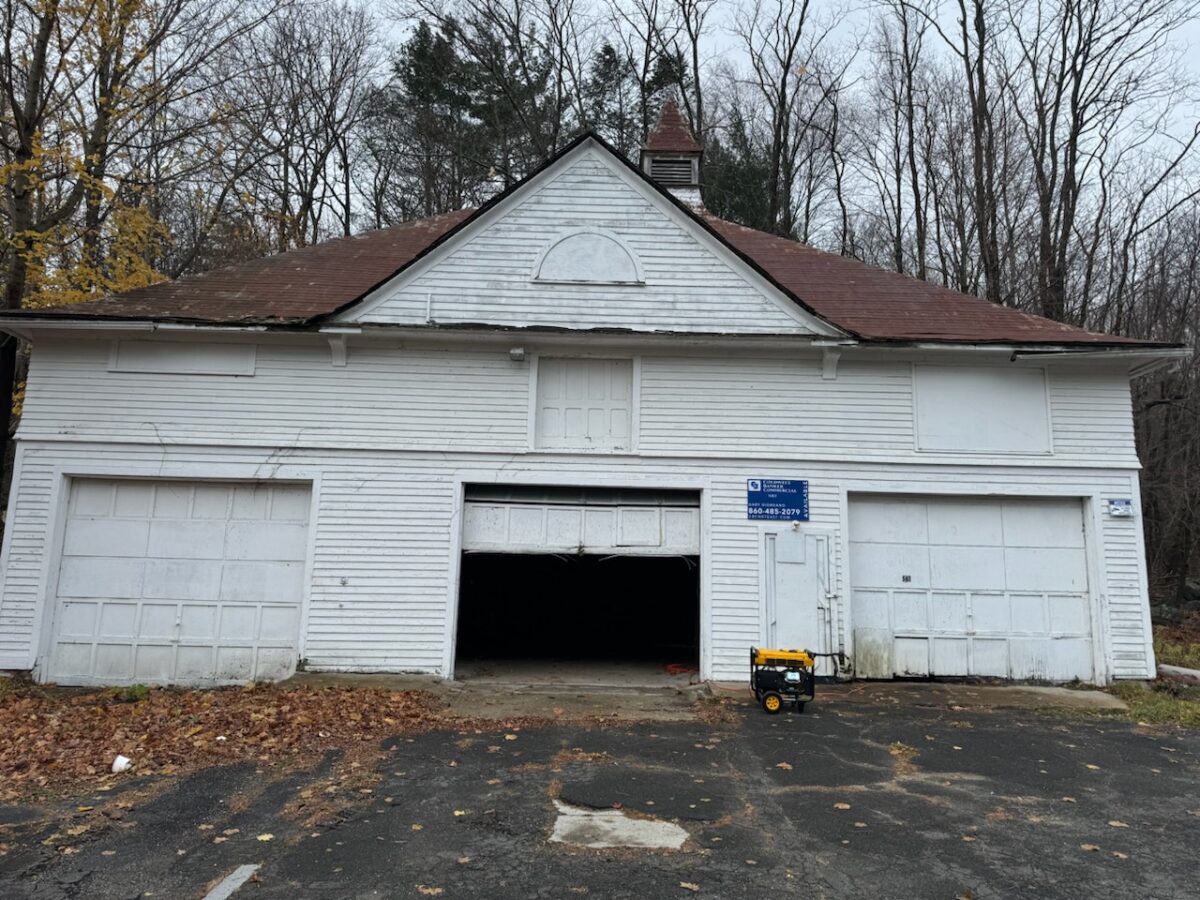
The existing building at 161 Meadow Street is a two-storey New England commercial structure with a distinctive cupola, three garage bays, and more character than most new builds could fake. The bones were good. The execution, over the decades, was not.
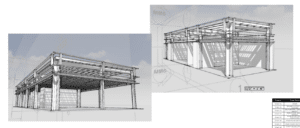
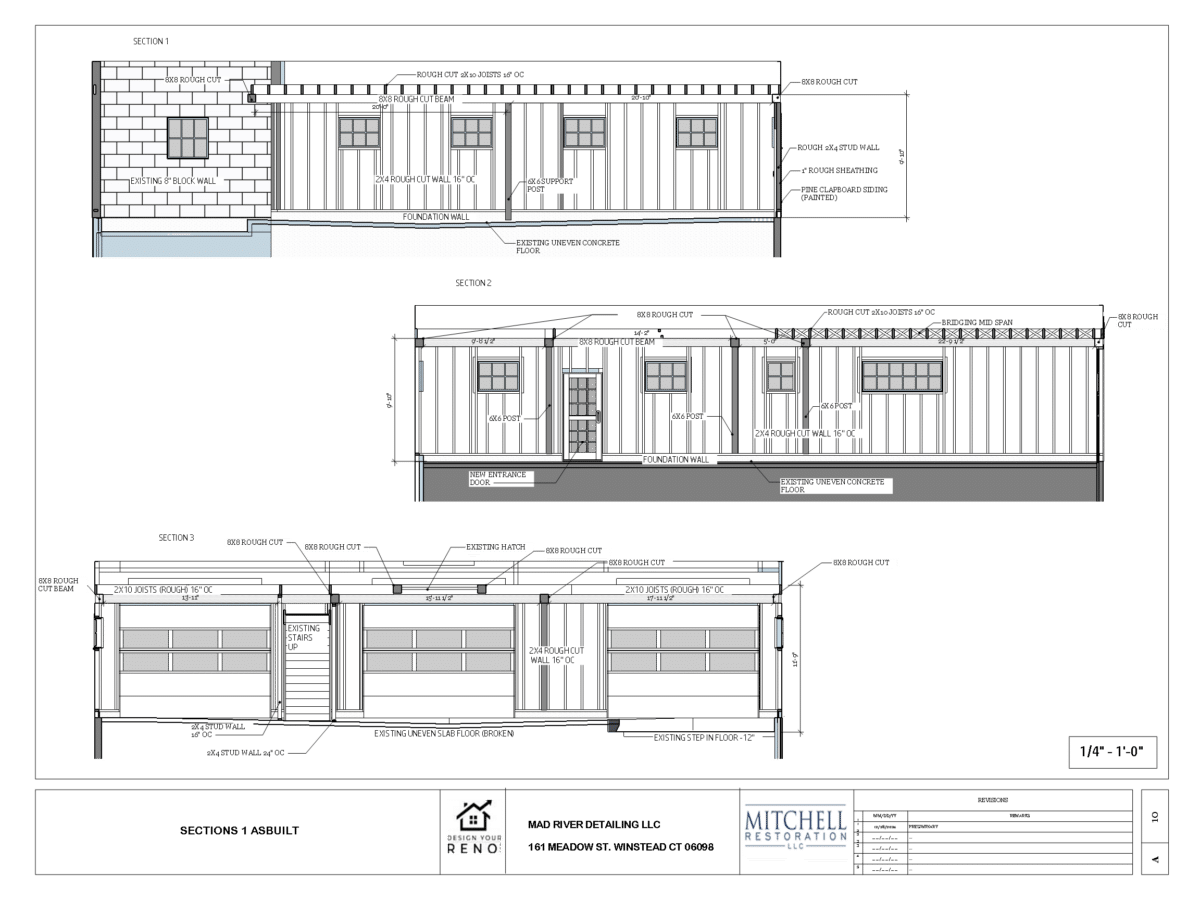
The existing structure was rough cut throughout — 8×8 beams, 6×6 posts, 2×10 joists — the kind of construction that was built to last but never maintained to match. Nine structural support points were missing entirely. The concrete floor was uneven, split across two levels with a 12-inch step for reasons nobody could explain. The cupola was rotting. Every window needed replacement.
The client’s vision was an upscale automotive detailing facility — ceramic coatings, paint correction, detailing bays — that looked the part from the street. That meant taking a tired building and making it look like it had always been this good.
Phase One: Concept Design and Exterior Finishes
The first phase established what the finished building would look like and documented every exterior finish decision in a format the contractor could actually use.
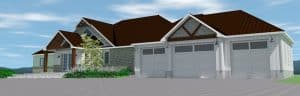
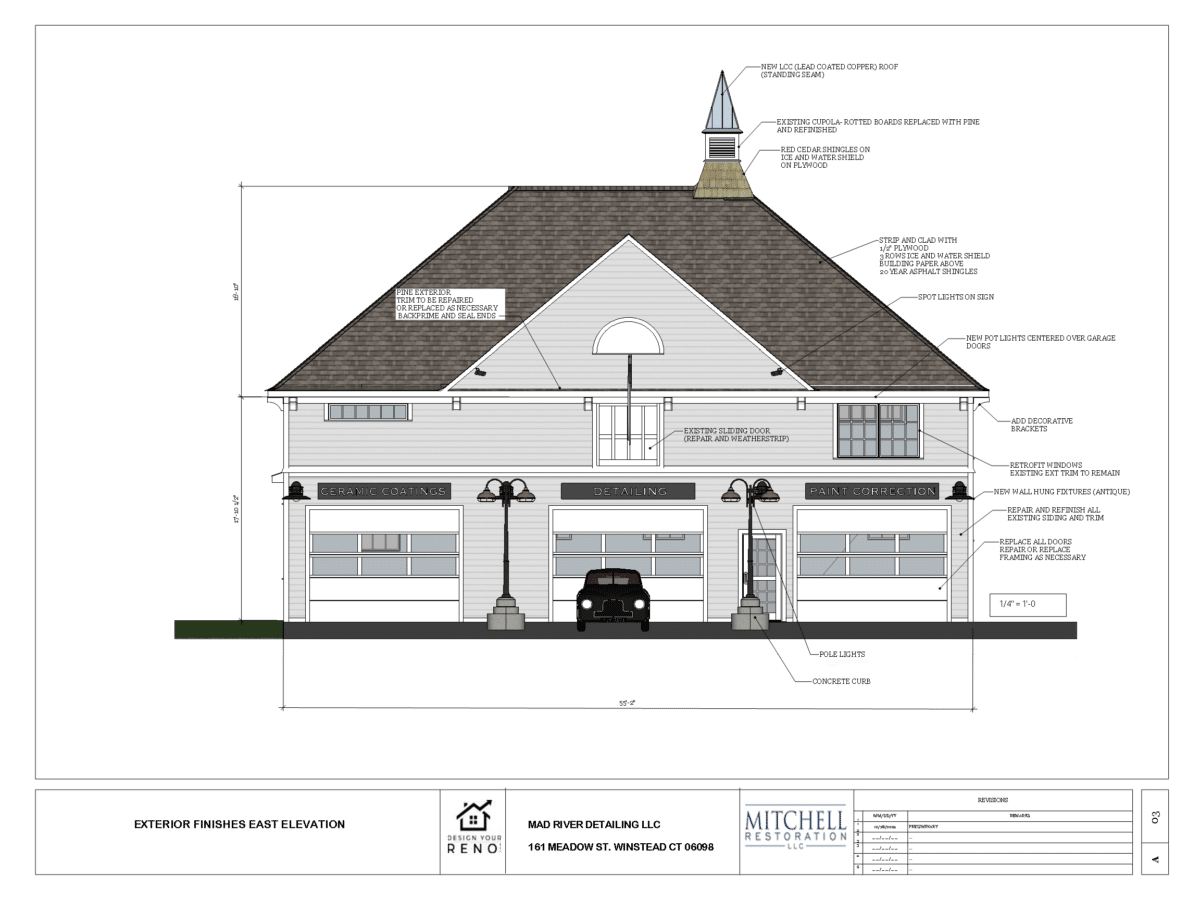
Exterior finish drawings covered all four elevations at 1/4″ = 1′-0″ scale. The scope included a lead coated copper standing seam roof over the main structure, red cedar shingles on the cupola surround, 20-year asphalt shingles on the secondary roof areas, and all-new windows with muntons throughout — 22 windows total, documented in a full window and door schedule with rough opening dimensions and manufacturer notes.
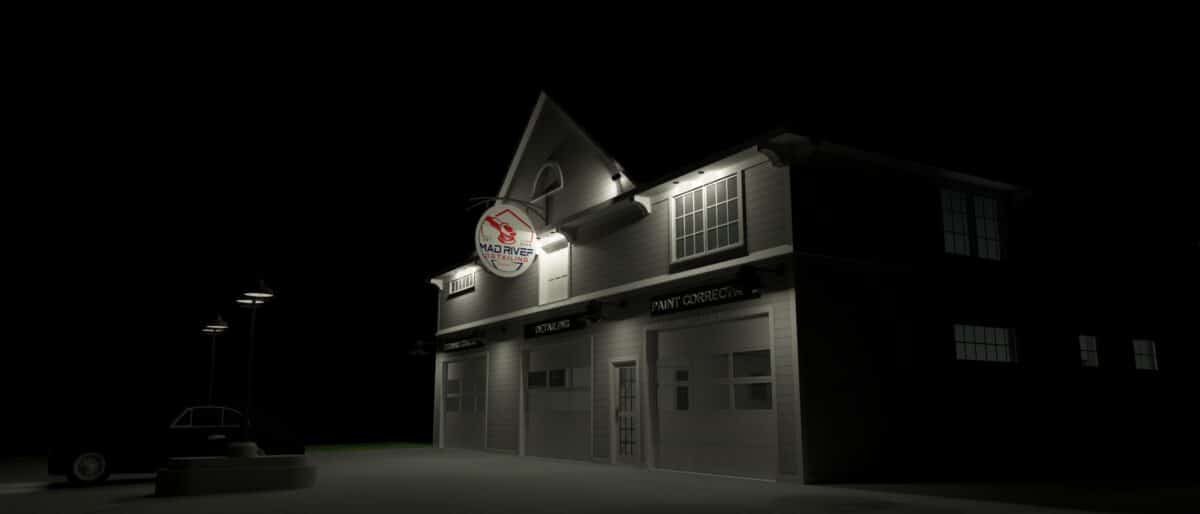
The cupola got new pine boards to replace the rotted sections and a full refinish. Decorative brackets were added at the eaves. Antique-style wall-hung light fixtures, pot lights over the garage doors, and pole lights at the curb completed the street presence.
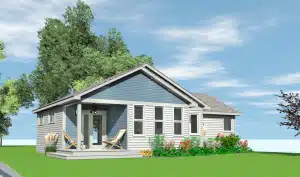
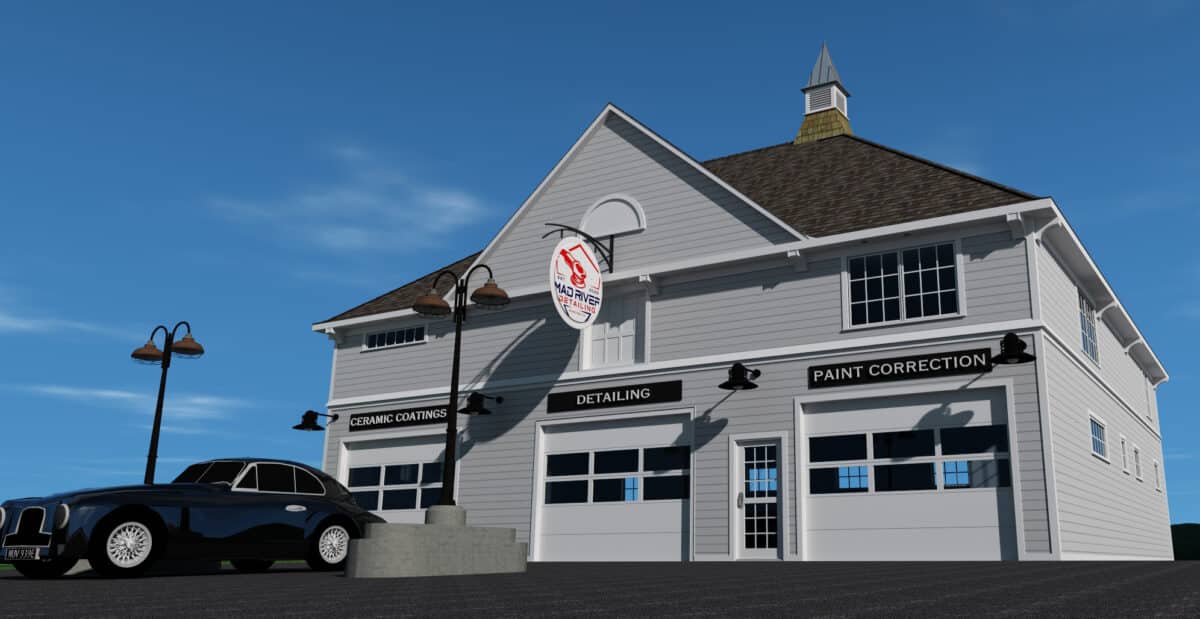
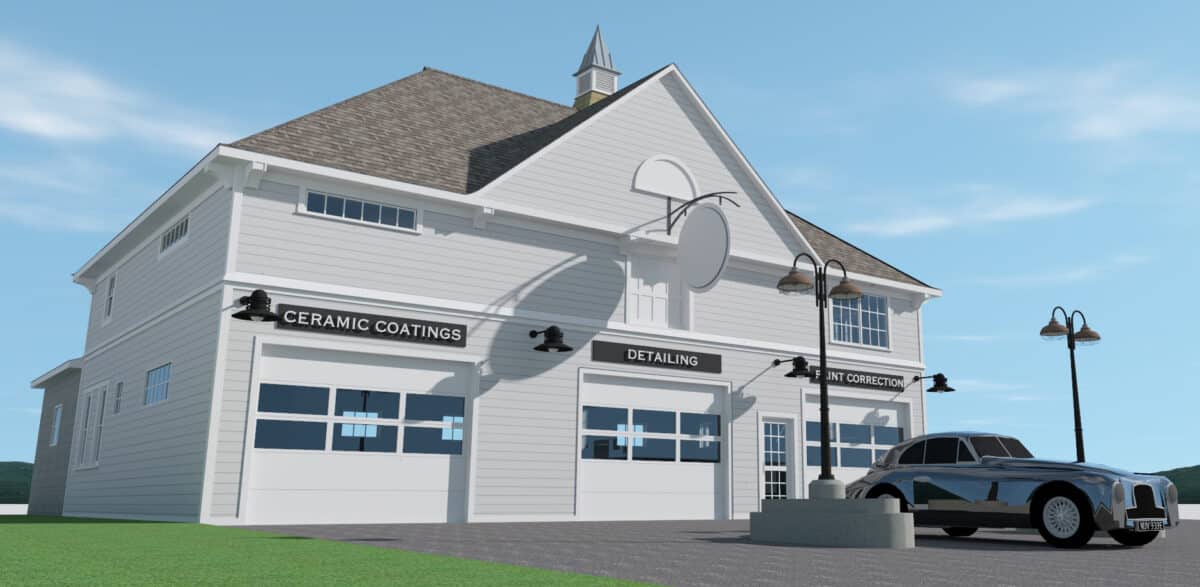
The concept renderings were provided to help the client visualize the transformation and get stakeholder buy-in before the structural work began. Day and night renderings were both produced.
Phase Two: Structural Asbuilts and Floor Reconstruction
Before anything new could be designed, the existing structure had to be fully documented. That meant going into the building and producing asbuilt drawings of every post, beam, and joist — including the nine locations where structural supports were missing entirely.
The floor reconstruction was the most complex part of phase two. The existing concrete slab was uneven and split across two levels with a 12-inch step. Before the new floor structure could go in, the concrete had to come out entirely to allow for the plumbing rough-in, floor drains, and a level finished surface — essential for a detailing operation where water management matters.
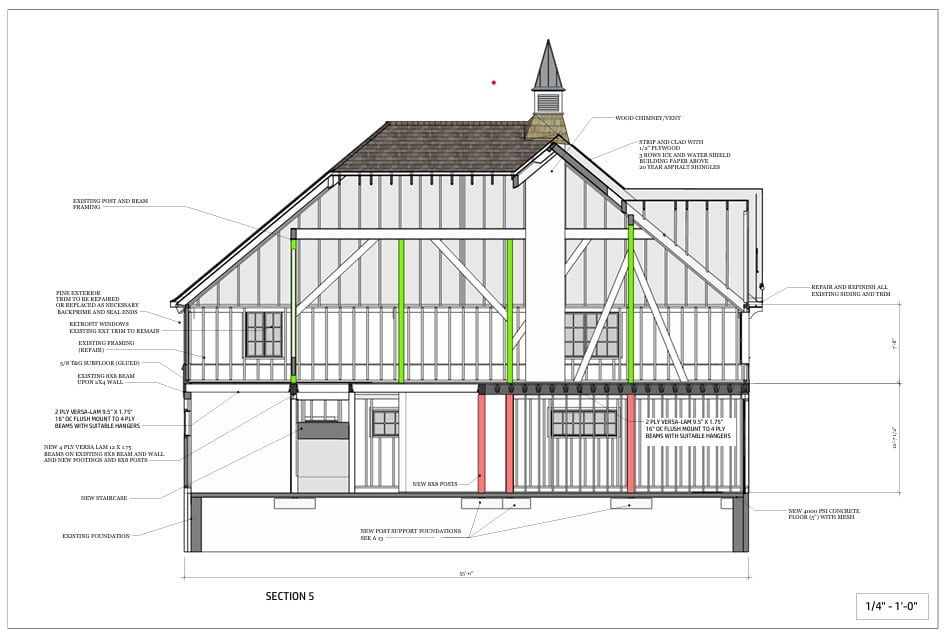
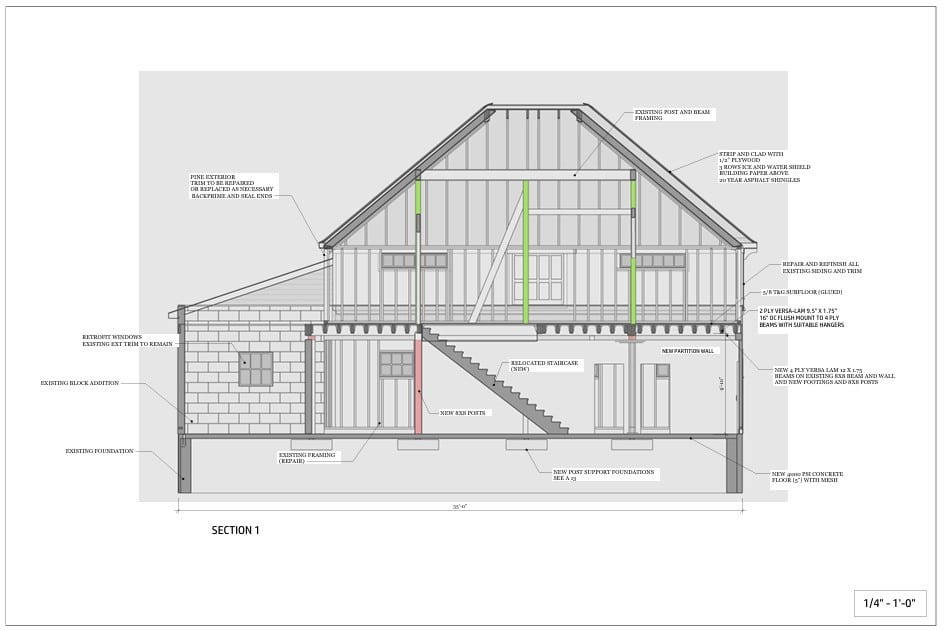
The new floor structure used 2-ply Versa-LAM 9.5″ x 1.75″ joists flush-mounted to 4-ply main beams with appropriate hangers. Main beams were 4-ply Versa-LAM 12″ x 1.75″. New concrete footers at 12″ depth were designed and located throughout. All existing beams and posts were scheduled for replacement.
Phase Three: Sections and Roof Structure
Once the foundation and floor structure were resolved, the final phase addressed the most technically demanding part of the project — locating and detailing the angular roof members.
The cupola, the hip roof geometry, and the relationship between the main roof and the secondary shed roof required sections that showed exactly where every beam, hip, and purlin landed. Multiple cross-sections were produced covering the full building width and height, with all structural members dimensioned and called out.
Color coding was used throughout the alteration sections — green denoting new structural elements, red denoting specific alterations — to give contractors unambiguous clarity about what was existing and what was new. In a building this old, that distinction matters on every sheet.
The staircase detail was produced to IBC 1011.5.2 commercial building code requirements with full riser and tread dimensions documented and noted for contractor confirmation on site.
The final working drawing package grew to 23 sheets as the structural complexity became fully understood through the asbuilt process.
What This Kind of Work Actually Takes
Historic commercial restoration design is not the same as new construction. You cannot design what you cannot see, and in a building this old, nothing is where it’s supposed to be.
The asbuilt process — documenting every existing beam, post, and joist before a single new detail is drawn — is what separates drawings that work from drawings that cause problems in the field. A contractor who opens a wall and finds conditions that don’t match the drawings loses time and charges for it. Asbuilts eliminate that.
The multi-phase approach also matters. Concept first, then structure, then details — each phase informed by what the previous one revealed. That’s not how every designer works. It’s how this kind of project has to work.
Commercial projects also require code compliance documentation that residential work doesn’t. Staircase geometry, guard rail requirements, occupancy loads — these are not optional and they are not the contractor’s job to figure out from incomplete drawings.
Working on a Commercial Restoration?
Commercial historic restoration requires a different approach than standard renovation design. If you’re working with an existing structure that has unknown conditions, a building with character worth preserving, or a project that needs to be documented before it can be designed, get in touch.
For residential addition and renovation design see our Projects page. For outdoor structure and deck design visit GardenStructure.com.