If you’re searching for straight answers on getting a building permit in Barrie, Ontario, you’re in the right place. I’ve been submitting permit applications in Simcoe County for decades. What follows is what I know from direct experience – not from the City’s website, but from actually going through the process.
Plan your timeline accordingly. Build in contingency. And read this before you draw a single line.
Lorem ipsum dolor sit amet, consectetur adipiscing elit. Ut elit tellus, luctus nec ullamcorper mattis, pulvinar dapibus leo.
How to Submit a Building Permit Application in Barrie: The APLI Portal
Barrie uses an online portal called APLI for permit submissions. All drawings must meet their Electronic Document Submission Standards – specific file formats, naming conventions, and layer requirements. If your drawings don’t conform, they won’t be accepted for review. That sounds straightforward. In practice, it’s an additional layer that catches people off guard if they haven’t submitted to Barrie before.
Download their Electronic Document Submission Standards PDF from barrie.ca before you start drawing anything. A rejected upload doesn’t start the review clock – it restarts the frustration.
Before you submit anything, confirm your project complies with Zoning By-law Section 5.3 for setbacks and lot coverage. If your property is near a watercourse or natural hazard area, you’ll also need a permit from the Lake Simcoe Region Conservation Authority before Barrie will issue a building permit. That’s a separate process with its own timeline.
Deck Permit Barrie Ontario | What Your Drawings Must Show
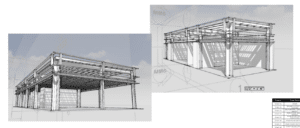
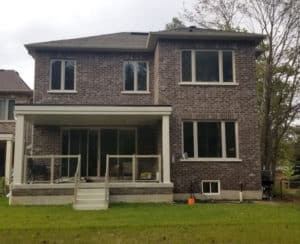
Nearly every deck permit application in Barrie requires the same core documentation, and nearly every delay comes from the same missing items. Here’s something that surprises a lot of people: an 18″ (457mm) high patio – meaning concrete or interlock laid on a prepared base at grade – generally doesn’t need a permit. An 18″ (457mm) high deck does. The distinction isn’t arbitrary. A patio sits on grade and moves with the frost the same way the ground does. A deck is a structure with posts, footings, and a framed platform that carries loads, imposes point loads on the ground, and creates a fall hazard if it fails. The permit threshold is about structural accountability, not height.
If the deck is attached to the house, elevated more than 24″ (600mm) above grade, or includes a roof or enclosure of any kind, assume you need a permit. The exemptions for small, low, ground-level structures are narrow.
Barrie publishes a Deck Specs document that outlines their standard structural requirements. If your design follows their specs exactly, you stand the best chance of a clean first review. Here’s what their standard package requires:
Footings: Minimum 10″ (254mm) diameter sonotube, belled out at the base, set a minimum of 4′-0″ (1,200mm) below grade. No brick veneer permitted at footings. The belled base is non-negotiable – it’s their standard for bearing area and frost protection in this climate. The footing diameter at the bell varies based on pier spacing and load; their tables run from 10″ (254mm) at closer spacings up to 13″ (330mm) at wider spans.
Posts: Minimum 6×6 (140mm x 140mm) posts are required. This surprises a lot of homeowners used to seeing 4×4 (89mm x 89mm) posts on older decks. The City moved to 6×6 as their standard some time ago and they won’t accept less.
Joists and Beams: Their published span tables cover 2×8 (38mm x 184mm), 2×10 (38mm x 235mm), and 2×12 (38mm x 286mm) joists. For decks more than 2′-0″ (600mm) above adjacent grade, joists must be spaced no more than 16″ (400mm) on centre. Here’s what their tables give you at 16″ (400mm) spacing:
- 2×8 (38x184mm): maximum span 11′-9″ (3,580mm)
- 2×10 (38x235mm): maximum span 13′-8″ (4,165mm)
- 2×12 (38x286mm): maximum span 15′-6″ (4,725mm)
If your layout pushes beyond their tables, you’ll need an engineer’s stamp.
Hardware: This is where I see the most unnecessary permit failures. Joist hangers must be fastened with minimum 3″ (76mm) common galvanized nails – not wood screws, not deck screws, not drywall screws. The City’s specs are explicit on this. If your drawings don’t call out hardware correctly, it will come back.
Guardrails: Required on any deck surface more than 24″ (600mm) above grade. Rail height must be a minimum of 36″ (915mm) for decks up to 6′-0″ (1,800mm) above grade, and 42″ (1,065mm) above that. Maximum picket spacing is 4″ (100mm) – nothing a 4″ (100mm) sphere can pass through. Top rail, post, and picket details all need to be shown on the drawings.
Stair Stringers: Maximum 35″ (900mm) apart, or up to 47″ (1,200mm) where the stringer is reinforced. Minimum 6″ (150mm) clearance above grade at the base of the stringer.
Site Plan: You need to show the deck footprint on a site plan with dimensions to all property lines. Rear yard and side yard setback compliance gets checked at this stage. Confirm your setback requirements under Zoning By-law Section 5.3 before you finalize the design – a deck that works structurally but sits 6″ (150mm) inside a setback won’t get approved.
What Triggers an Engineer: Anything outside Barrie’s standard specs requires a professional engineer’s review and stamp. This includes unusual spans, cantilevered sections beyond their tables, rooftop decks, decks over living space, and any condition where their published details don’t apply. Budget accordingly – engineering adds cost and time, and it adds weeks to your timeline.
Home Addition Permit Barrie Ontario | Why It's More Complex Than You Think
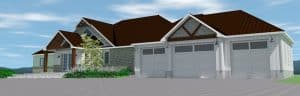
A home addition permit in Barrie is significantly more involved than a deck permit, and clients consistently underestimate what’s required before they can even submit.
Why Barrie Requires Existing Home Documentation for Addition Permits
Before the City can assess your addition, they need to understand the building it’s connecting to. In practice this means your drawings need to document the existing structure – not just show the new addition. Depending on scope, you may need to document:
- Every existing window and door, with sizes in both dimensions
- Wall construction assemblies, with existing insulation type and R-values where known
- Ceiling and floor insulation, existing condition
- Mechanical equipment – furnace make, model, and BTU/kW rating; water heater specifications
- Existing electrical panel capacity if the new work adds load
The reason for this isn’t bureaucratic overreach, even when it feels like it. It’s SB-12.
SB-12 Energy Requirements for Home Additions in Barrie
SB-12 is Ontario’s supplementary standard for residential energy efficiency, and it’s the reason your addition permit requires so much existing building documentation. When you add to a house, the building code requires the addition to meet current energy performance standards. The complication is that the addition doesn’t exist in isolation – it connects to the existing thermal envelope, and your heating system has to handle both the existing house and the new space.
For the first several decades I was doing this, you called your HVAC contractor, he looked at the house, and between experience and basic heat loss math you arrived at a sensible heating solution. That worked, because any properly sized conventional heating system will heat a house. The process has since been formalized into something considerably more involved.
Today, your designer specifies the energy compliance path – prescriptive or performance – and that choice drives real decisions about insulation values, window performance ratings, and mechanical specifications. An HVAC engineer signs off on the mechanical side. Here’s the practical reality: if SB-12 is calling for insulation values that seem extraordinary for the addition, that’s often a signal the existing building’s heating capacity is already marginal for its current footprint. The insulation spec and the mechanical spec are linked – you can’t resolve one without knowing the other.
The honest version of this is: you cannot know what insulation your addition requires until the existing building has been fully documented and the mechanical analysis is done. Anyone telling you otherwise hasn’t done this process recently.
One note on heat pumps: the 2024 OBC moves toward heat pump compliance paths under SB-12. If you’re in that conversation with a reviewer, be aware that standard air-source heat pumps lose significant efficiency below -10°C (-14°F) and can lose heating capacity entirely at the temperatures Barrie regularly sees in January and February. A cold-climate heat pump or a dual-fuel system (heat pump with gas backup) is the honest answer for this climate. A system spec’d for southern Ontario performance numbers will underperform here.
What to Prepare for an Addition Permit Submission:
- Full site plan with grading
- Floor plans of existing and proposed, fully dimensioned
- All elevations, existing and proposed
- Building sections showing wall, floor, and roof assemblies with insulation specifications
- Window and door schedule with sizes and performance values (U-value or ER rating)
- Existing mechanical documentation
- SB-12 compliance path clearly identified
- Schedule 1 Designer Information Form
- Applicable Law Checklist
For anything involving structural changes – removing walls, adding openings, new beams, point loads – engineering drawings and a commitment to general review will be required.
Gut Renovation Permit Barrie Ontario | Full Energy Documentation Required
A full gut renovation permit in Barrie triggers the same energy documentation requirements as a new addition. If you’re taking a house to the studs, expect to specify new insulation throughout, confirm window performance values, and have the mechanical system assessed against the new envelope. This is the code working as intended – a gut renovation is the moment to bring a building up to current standards, and the City treats it that way.
Garden Suite & ARU Permit Barrie Ontario | What's Allowed in 2026
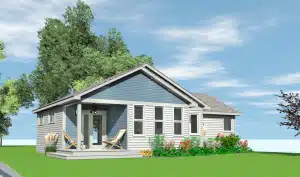
If you’re researching an ARU or garden suite permit in Barrie, this is an area where the City has made a genuine effort to streamline – and where the 2026 incentives are worth understanding before you start.
The City amended its zoning by-law to permit up to four dwelling units on residentially zoned properties. That’s a significant change from older rules and it opens up real options for homeowners looking at rental income, multigenerational living, or simply adding value to their property.
How Many Units Can You Build on a Barrie Residential Lot?
An ARU can be:
- Interior – within the existing footprint, such as a basement suite
- Attached – an addition connected to the main structure with its own entrance
- Detached – a separate garden suite, coach house, or laneway unit on the same lot
All three types are now permitted on most residential lots in Barrie, subject to zoning standards.
Parking: One space per ARU added. Minimum stall size is 18′-0″ x 8′-10″ (5.5m x 2.7m). Tandem and stacked arrangements are accepted, but every space – for both the main unit and the ARU – must be shown on your site plan.
Access: A minimum 4′-0″ (1.2m) wide path from the street or parking area to the ARU entrance is required.
Size: The Ontario Building Code sets a minimum floor area of 188 sq ft (17.5m²) for an ARU. Within that, minimum room sizes are:
- Kitchen: 45 sq ft (4.2m²)
- Living area: 145 sq ft (13.5m²)
- Primary bedroom: 95 sq ft (9.8m²)
- Additional bedrooms: 75 sq ft (7.0m²)
- Bathroom: 32 sq ft (3.0m²)
Maximum size is capped by your zone’s floor area ratios. Confirm with your zoning check before committing to a design.
Setbacks and Height: A detached ARU must not be located more than 98′-6″ (30m) from the principal residence. Maximum building height is one storey – 14′-9″ (4.5m). Side and rear setbacks are a minimum of 5′-0″ (1.5m).
Conservation Authority: If your property is near a watercourse or regulated area, you need conservation authority sign-off before the City will issue a building permit.
Barrie ARU Permit Fee Incentive 2026 | Read the Fine Print
The City is currently offering 50% off building permit application fees for ARUs in 2026. If your unit achieves occupancy – or passes a final interior inspection – within 12 months of permit issuance, you qualify for a full rebate on those fees. That’s a meaningful incentive if your project is ready to move. Confirm current incentive status with Service Barrie when you’re ready to submit – don’t assume it carries into 2027.
Detached Garden Suite Permit Drawings | What Barrie Requires
Beyond standard site plan and zoning compliance documentation, a detached ARU submission typically requires:
- Site plan showing location of both structures, setbacks, all parking spaces with dimensions, and the 4′-0″ (1.2m) access path
- Floor plans with room dimensions and ceiling heights
- Exterior elevations on all four sides
- Building sections with wall, roof, and floor assemblies and insulation specs
- Mechanical layout
- SB-12 energy compliance documentation
- Schedule 1 Designer Information Form
- Fire Code CO alarm compliance confirmation
Note that as of January 1, 2026, Ontario updated the Fire Code with expanded requirements for carbon monoxide alarms in rental units. Confirm current placement requirements before finalizing your drawings.
Barrie Zoning By-law 2026 | Still Not Finalized
Barrie’s comprehensive Zoning By-law has been in redraft for several years. As of early 2026 the new by-law is still not finalized – provincial planning statement changes pushed the timeline again. The existing by-law (2009-141) remains in effect. Some ARU setbacks, height limits, and lot coverage rules are still governed by that older framework. Verify your specific zone requirements directly with Service Barrie before you commit to a design.
How Long Does a Building Permit Take in Barrie? The Honest Answer
The Building Code Act sets a 10-day review target for Part 9 residential applications. My recent submissions across decks, additions, and ARUs have averaged considerably longer than that – nine months on deck permits alone. Multiple review cycles are common. Build 9 to 12 months of permit lead time into any project schedule that runs through Barrie’s building department. If it comes faster, that’s a bonus. If you plan for fast and it doesn’t come fast, your contractor is sitting, your material pricing is moving, and your client is calling.
Submit a complete application the first time. Every item on the checklist, properly formatted for APLI, with zoning compliance confirmed before submission. An incomplete application doesn’t start the review clock – it starts the back-and-forth. A complete application, even if it comes back with questions, is working through the process.
If you want help putting together a permit-ready drawing package for a project in Barrie – deck, addition, or ARU – that’s work we do. The fastest permit is the one that arrives without surprises.
Lawrence Winterburn is the founder of DesignYourReno.com and GardenStructure.com, with over 40 years of construction and design experience in Ontario and Simcoe County. He is a contributor to Professional Deck Builder Magazine and the Journal of Light Construction.