
Expert Addition Design Services in Tiny Township Ontario – Transforming a 1950s Cottage
Lawrence Winterburn May 4, 2025 0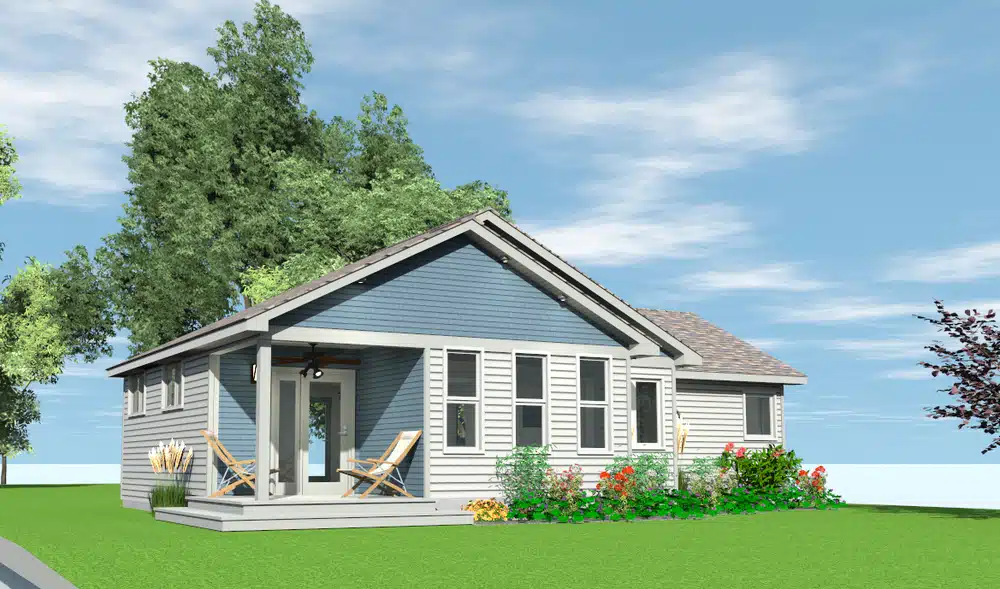
Project at a Glance
Location: Tiny Township, Simcoe County, Ontario
Property Type: 1950s cottage with multiple previous additions
Clients: Dual-income couple living full-time, frequent hosts
Challenge: Multiple additions at different heights, dubious foundation construction, complex roof integration
Solution: Master suite addition with complete roof restructure using engineered trusses
Budget: $475 per square foot (realistic for complex cottage renovation)
Design Investment: $5,000 for concepts and interior renderings
Timeline: 1 month design process with 3 presentation meetings
Status: Clients saving for construction + contingency budget for expected complications
Key Design Features:
- Grand master suite with walk-in closet and ensuite bath
- Cozy guest bedroom for frequent visitors
- Complete roof redesign with engineered trusses (eliminates ice damming and insulation issues)
- Helical pile foundation system (addressing multiple foundation types and questionable construction)
- Interior layout maximizing cottage charm while adding modern comfort
- Front addition component integrated with existing structure
The Reality Check: When you see a 1950s cottage with multiple additions at different heights, budget minimums go out the window. You can save the trees, but you won’t save money.
The Full Story: Addition Design for a 1950s Cottage in Tiny Township
Our clients for this addition design project in Tiny Township, Ontario, are a hardworking couple who recently purchased what was once a cozy cottage. For them, this home represents both present comfort and future potential – they’re living in it full-time while planning an addition that will transform it into their dream home.
Like many families in Tiny Township and Springwater, they dreamed of turning a modest property into something that truly fits their lifestyle. They came to us with clear priorities: maintain the cottage’s comfortable character while adding a grand master suite, and ensure there’s a welcoming guest bedroom since they frequently host friends and family.
This stage – dreaming, planning, and exploring options – is just as important as the building itself. An architectural design consultation allows homeowners to test-drive ideas, visualize possibilities, and shape a clear path forward before committing to construction.
For over 40 years, we’ve specialized in addition design throughout Tiny Township, Springwater, Elmvale, Midland, Wasaga Beach, Penetanguishene, and the broader Simcoe County region. We understand the unique challenges of cottage country properties and the realistic budgets required to do the work properly.
Understanding the Existing Structure: When Simple Isn’t an Option
The 1950s Cottage with a Complicated History
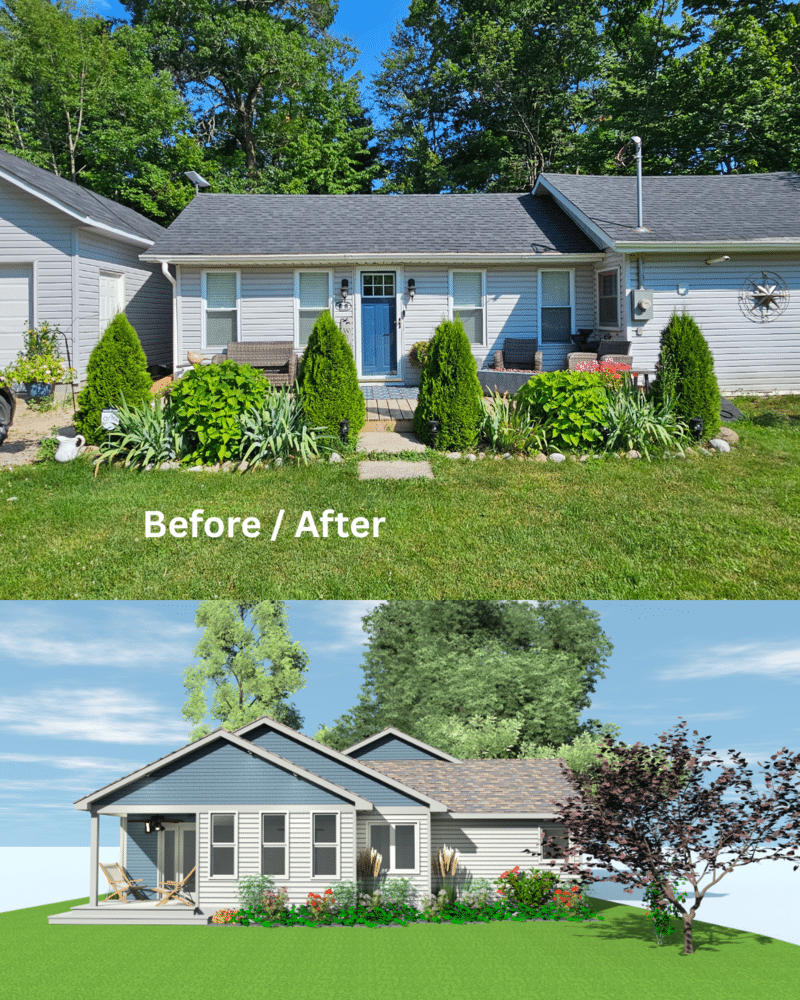
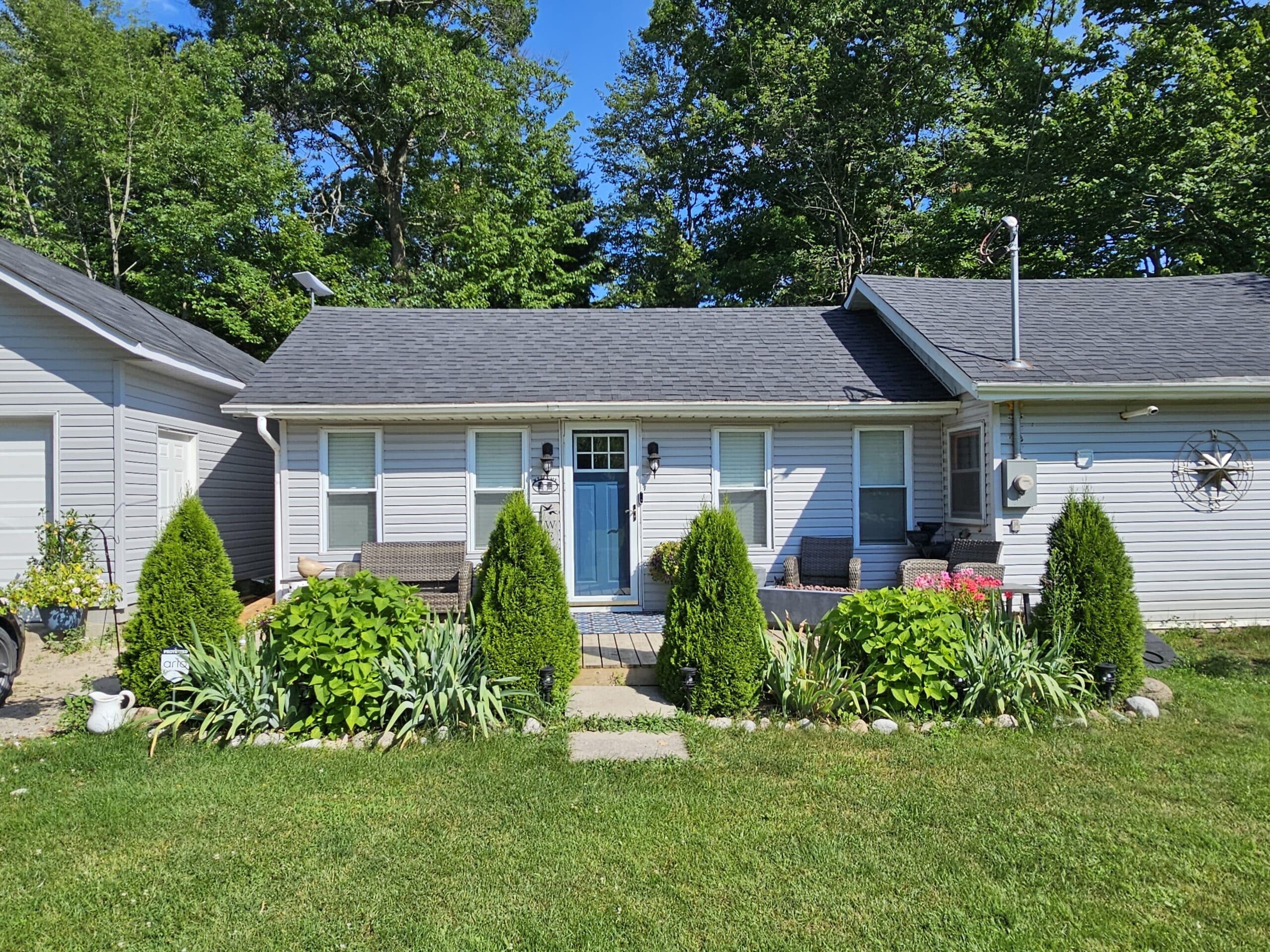
The existing cottage told a story common throughout cottage country: a simple 1950s structure that had been added onto multiple times over the decades. Each addition created at different heights, built by different contractors, using different construction methods. This is the reality of cottage evolution – layers of history that create both character and complexity.
When we see properties like this, we’re honest with clients from day one: the low end of budget estimates goes out the window. Really, it would often be cheaper to demolish everything and start fresh. You can save the existing trees and the cottage’s bones – but you will not save money.
Why? Because working with existing structures means:
Foundation Complications: This cottage had part slab, part piers, and part block foundation of dubious construction and unknown depth. You can’t just build on top of questionable foundations and hope for the best.
Structural Unknowns: Multiple additions mean multiple framing systems, potentially hidden damage, and definitely inconsistent construction quality.
Code Compliance: Bringing old construction up to current building codes while integrating new additions requires creative engineering.
Height Variations: Different ceiling heights and floor levels create complex roof transitions and structural challenges.
Hidden Problems: You don’t know what you’ll find until walls are opened – and with 70+ years of history, there will be surprises.
Our clients understood this reality. They’re saving additional funds specifically for expected complications during construction. This is smart planning – hope for the best, budget for reality.
The Design Challenge: Master Suite Addition with Roof Restructure
What the Clients Needed
This couple lives in the cottage year-round and hosts frequently. Their wish list was clear and practical:
Grand Master Suite: As their primary residence, they wanted a spacious master bedroom that feels like a retreat, not an afterthought. Walk-in closet, luxurious ensuite bath, and enough space to feel comfortable long-term.
Guest Bedroom: With friends and family visiting regularly, a cozy guest room was crucial. Not a tiny box where guests feel cramped, but a welcoming space that makes hosting a pleasure.
Maintained Cottage Character: They loved the cottage feel and wanted additions that enhanced rather than overwhelmed the existing charm.
Practical Layout: The space needed to function for daily living, not just look good on paper.
The Structural Solution: More Than Just Adding Rooms
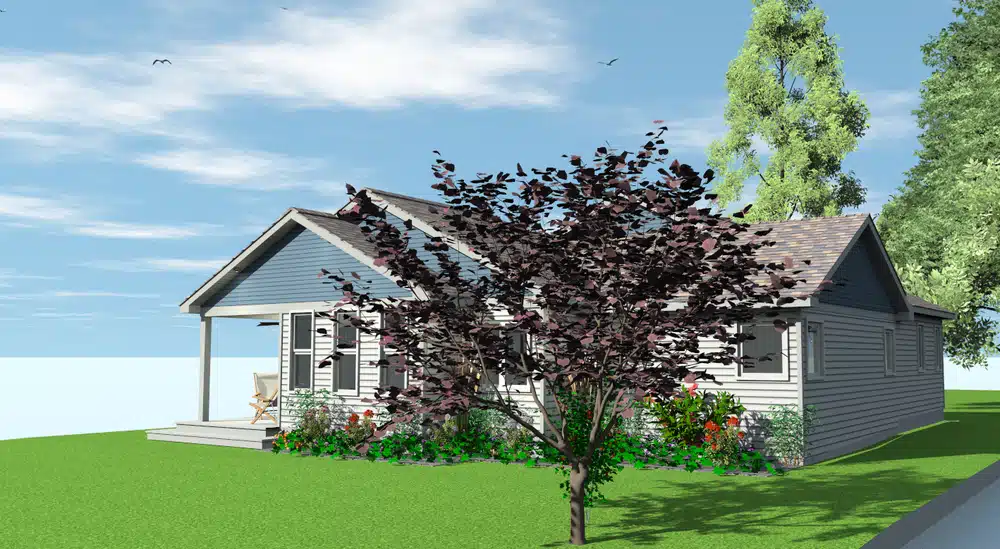
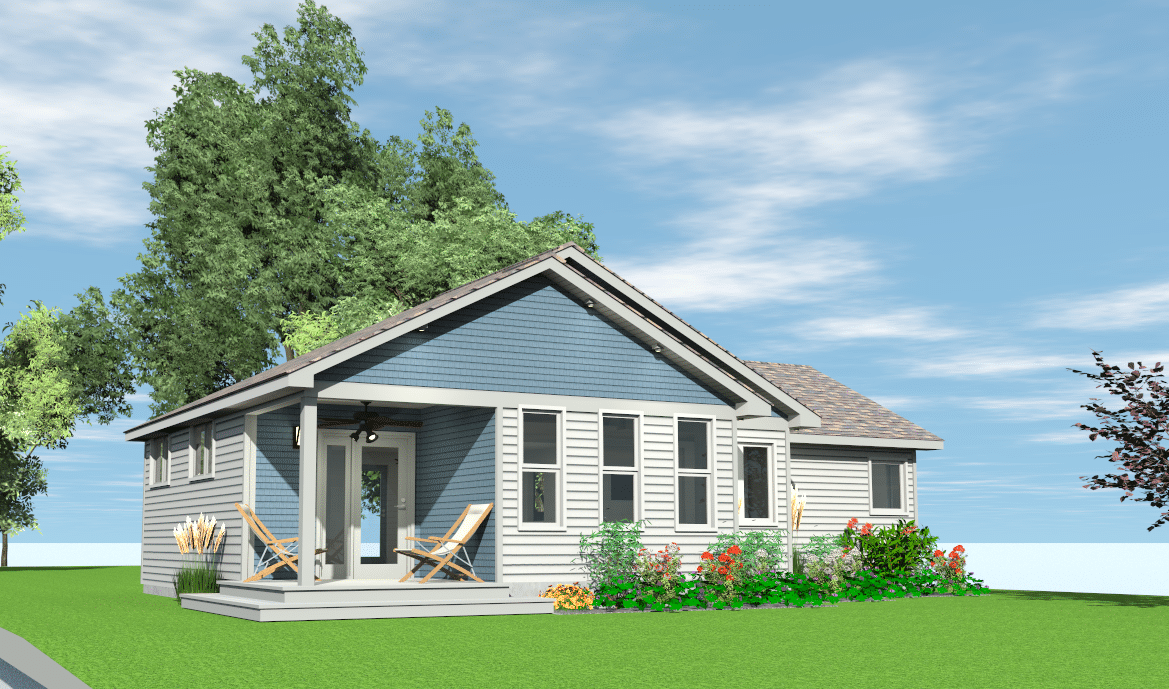
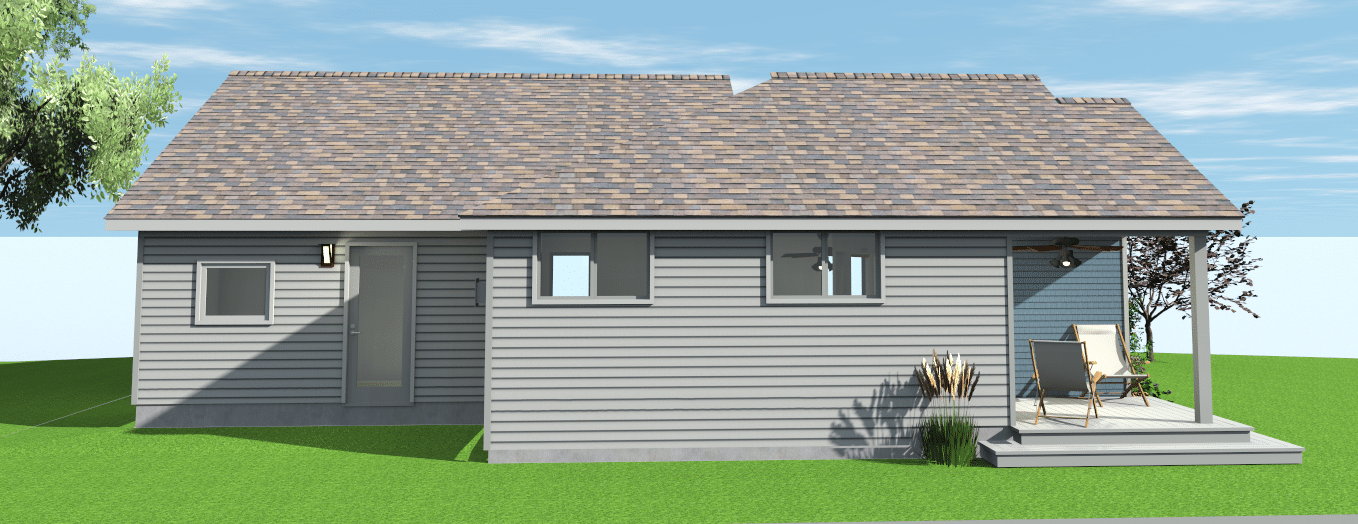
The master suite addition straddles the old rear section along with new construction. This integration required careful planning to connect old and new seamlessly.
We also designed a portion off the front of the cottage, creating better proportions and additional functional space.
But the most significant design decision involved the roof.
Reworking the Entire Roof System
Rather than adding sections of roof onto the existing patchwork – which would guarantee leaks from ice damming and insulation nightmares – we redesigned most of the roof structure.
The Problem with Patchwork Roofs:
When cottages grow through multiple additions, roofs become complicated puzzles. Different pitches meeting at odd angles. Valleys that trap snow and ice. Insulation that’s impossible to install properly. The result? Ice dams in winter, leaks, heat loss, and endless maintenance headaches.
Our Solution: Engineered Trusses
We reworked the majority of the roof to be constructed with engineered trusses. This provides:
- Better Drainage: Proper pitch and no problematic valleys
- Superior Insulation: Trusses allow for proper depth and ventilation
- Structural Integrity: Engineered connections, no guesswork
- Ice Dam Prevention: Proper insulation and ventilation eliminate the conditions that cause ice dams
- Long-Term Performance: A roof system that will last decades without the chronic issues of patchwork construction
Yes, this adds to the project scope. But it solves problems that would plague the homeowners forever otherwise. This is the difference between bandaid solutions and doing it right.
Foundation Strategy: Helical Piles for Mixed Conditions
With part slab, part piers, and part block foundation of questionable construction, we couldn’t just hope existing foundations would support the addition.
Our design calls for adding support to existing beams and supporting much of the structure with helical footings. These engineered foundation systems:
- Transfer loads to stable soil regardless of existing foundation quality
- Never heave or settle with frost action
- Provide 100-year performance
- Can be installed with minimal excavation
- Allow us to confidently support new and existing structure
This is the kind of engineering that makes cottage additions successful rather than problematic.
The Addition Design Process: From Concept to Construction-Ready Plans
Phase 1: Initial Consultation and Wish List
Our first meeting focused on understanding the clients’ lifestyle and priorities. We walked the property together, discussed their vision, and had honest conversations about budget realities.
Key questions we explored:
- How will you use each space daily?
- What’s your entertaining style?
- What bothers you about the current layout?
- What do you love that must be preserved?
- What’s your realistic budget including contingencies?
Phase 2: Concept Development – Three Presentation Meetings
Over approximately one month, we developed concepts and interior renderings. This involved three presentation meetings where we refined the design based on client feedback.
Meeting 1 – Initial Concepts:
We presented multiple layout options showing how the master suite and front addition could integrate with the existing cottage. Clients provided feedback on what they loved and what needed adjustment.
Meeting 2 – Refined Design:
We incorporated their feedback and presented more detailed concepts including interior renderings. This is where the design really comes to life – clients can see themselves in the spaces.
Meeting 3 – Final Concept:
We finalized the design direction, confirmed materials and finishes, and prepared for the next phase: construction documentation.
Phase 3: Interior Renderings – Visualizing Your Future Home
Professional 3D interior renderings are invaluable for cottage addition projects. They show:
- How rooms will feel, not just how they measure
- Material and finish combinations
- Natural light at different times of day
- Furniture placement and scale
- The relationship between old cottage and new addition
For a $5,000 investment, our clients could see their future home and make confident decisions before construction began. Changes on paper cost nothing. Changes during construction cost thousands.
Addition Design Considerations: Function Leading Form
We Are Function-Leading-Form Addition Designers
Every successful addition design starts with the right questions: how much more space do you need, and what will you use it for? Before drawings and renderings, your designer needs a clear “Wish List.” This is the foundation for a concept that reflects your lifestyle and priorities.
During the initial consultation (usually one to two hours), we take time to understand:
- Who you are and how you live
- Your daily routines and habits
- How you entertain and host guests
- What frustrates you about current space
- What you absolutely must have
- What’s nice-to-have but negotiable
The Value of Feedback in Addition Design
Designing an addition is always a collaboration. Client feedback plays a central role in refining concepts into something both practical and inspiring. We begin with the “Addition Wish List,” then guide clients toward solutions that balance creativity, functionality, and budget.
We encourage thinking long-term. While following short-lived design trends can be tempting, a home addition should stand the test of time. The goal is creating something that feels current today but will still look and function beautifully many years from now.
For the Tiny Township clients, we developed concepts that honored the cottage’s character while creating the modern comfort they needed. Through three presentation meetings, we refined ideas until the design felt exactly right.
Realistic Budgeting: The $475 Per Square Foot Reality
Why Cottage Additions Cost More
New construction in Ontario typically ranges between $375 and $700 per square foot. Additions, however, add complexity:
- Demolition of existing structure
- Disposal costs
- Work required to connect new to existing
- Bringing old construction up to code
- Structural unknowns and surprises
- More complex engineering
- Matching materials and finishes
For additions, add another $100 to $300 per square foot beyond new construction costs.
This Project’s Budget Strategy
We established a realistic budget of approximately $475 per square foot for this Tiny Township addition. This reflects:
- The complexity of multiple existing additions
- Questionable foundation requiring helical pile support
- Complete roof restructure with engineered trusses
- Integration challenges with existing structure
- Contingency for expected surprises
- Quality materials and finishes appropriate for permanent residence
The Smart Approach: Saving for Contingencies
Our clients are currently saving additional funds specifically for construction. They understand that opening walls in a 1950s cottage with multiple additions will reveal unexpected issues.
This is wise planning. Having contingency budget prevents:
- Stopping construction mid-project
- Making compromising decisions under pressure
- Accumulating debt beyond original plans
- Stress and conflict during the build
Better to save an extra year and do it right than rush into construction underfunded.
Why Professional Addition Design Matters
Designed to a Budget From Day One
Understanding costs is vital. We approach design as builders with decades of hands-on experience. This gives us clear perspective on realistic budgets, preventing surprises later.
Many designers and architects may not have firsthand knowledge of actual construction costs. We do. We’ve bought the materials, paid the labor, managed the projects. When we tell you a design will cost $475 per square foot, that’s based on real-world knowledge, not theoretical estimates.
Preventing Expensive Mistakes
Professional addition design saves money by:
- Avoiding structural errors that are expensive to fix
- Optimizing layout so you don’t pay for wasted space
- Specifying appropriate materials for your budget and needs
- Planning for contingencies based on experience with similar projects
- Coordinating systems (mechanical, electrical, plumbing) efficiently
- Meeting code requirements the first time, not after failed inspections
The $5,000 investment in professional design for this Tiny Township addition will save tens of thousands during construction by making smart decisions on paper rather than in the field.
Addition Design Services in Tiny Township and Simcoe County
Our Service Area
We provide addition design services throughout Simcoe County including:
- Tiny Township (including Perkinsfield, Lafontaine, Waverley)
- Springwater (including Midhurst, Minesing, Elmvale, Hillsdale)
- Midland
- Penetanguishene
- Wasaga Beach
- Clearview Township
- Tay Township
- Severn Township
We understand cottage country properties, seasonal considerations, local building departments, and the unique challenges of working in this region.
Why Local Expertise Matters
Designing additions in cottage country requires understanding:
- Seasonal Access: Some properties have winter access challenges
- Septic Considerations: Many cottage properties have septic systems that affect addition placement
- Waterfront Regulations: If near Georgian Bay or local lakes
- Local Building Codes: Each municipality has specific requirements
- Soil Conditions: Sandy soils, high water tables, bedrock – all affect foundation design
- Climate Factors: Snow loads, wind exposure, freeze-thaw cycles
We’ve worked in this region for 40 years. We know the local building inspectors, understand their expectations, and design for smooth approval.
Frequently Asked Questions: Addition Design in Tiny Township
How much does addition design cost in Tiny Township?
Addition design is more complex than new home design because you must first document existing conditions. Concept design fees typically range from $2,500-$10,000 depending on project complexity. This includes creating as-built drawings of what currently exists, developing multiple layout options, and producing elevation designs. Construction drawings (the detailed permit-ready plans) are quoted separately and typically cost a similar amount. The Tiny Township cottage project featured here was $5,000 for concept design with interior renderings. Why the investment? Because every dollar spent in design prevents ten dollars wasted during construction through poor planning, structural mistakes, or design changes in the field.
How long does the addition design process take?
Most addition design projects take 3-6 weeks from initial consultation to approved concepts. Complex cottage additions requiring multiple meetings and revisions may take 6-8 weeks for concept development. Construction documentation adds another 2-4 weeks depending on project scope. For this Tiny Township project, the concept development with interior renderings took approximately one month with three presentation meetings.
Should I save longer or compromise on the addition design?
Always save longer and build it right. Compromising on design quality, structural elements, or finishing construction underfunded creates problems that last the life of your home. The clients in this project are wisely saving additional funds for construction and expected contingencies. This prevents stopping mid-project, making poor decisions under financial pressure, or living with regret. An extra year of saving is worth decades of enjoying a properly designed and constructed addition.
Why do cottage additions cost more than new construction?
Cottage additions are complex because you’re working with existing structure. Costs increase due to: demolition and disposal, connecting new to old structure, bringing existing construction up to current code, unknown conditions inside walls, matching materials and finishes, more complex engineering, and inevitable surprises in older buildings. Plan for $100-$300 per square foot beyond new construction costs when adding to existing cottages.
What makes a 1950s cottage addition more expensive?
Older cottages often have: questionable foundation construction and depth, multiple previous additions at different heights, outdated framing and structural systems, hidden damage or deterioration, inconsistent construction quality, complex roof configurations, and materials that are difficult to match. These factors require extensive engineering, creative problem-solving, and contingency budgets. As we tell clients: you can save the cottage character, but you won’t save money compared to building new.
Do I need a building permit for additions in Tiny Township?
Yes, Tiny Township requires building permits for virtually all additions. The permit process includes: submission of architectural drawings, structural engineering (if required), site plan showing property lines and setbacks, septic system evaluation (if applicable), and building code compliance review. We create permit-ready drawings and can guide you through the Tiny Township building department approval process.
How do you handle foundation issues in cottage additions?
We design appropriate foundation systems based on existing conditions and soil characteristics. For this Tiny Township cottage with mixed foundation types (part slab, part piers, part block), we specified helical pile foundations. These engineered systems transfer loads to stable soil regardless of existing foundation quality, never heave with frost, provide 100-year performance, and can support both new addition and reinforced existing structure. This is smarter than hoping questionable foundations will support additional load.
Why redesign the entire roof for a cottage addition?
Adding sections to existing patchwork roofs creates chronic problems: ice damming from poor insulation, leaks at complex valleys and connections, inadequate ventilation, heat loss, and ongoing maintenance headaches. Redesigning the roof with engineered trusses provides proper drainage, allows adequate insulation depth, eliminates ice dam conditions, creates structural integrity, and ensures decades of trouble-free performance. The additional investment prevents problems that would plague you forever.
Ready to Start Your Addition Design in Tiny Township?
Whether you’re planning a cottage addition, master suite expansion, or complete home transformation in Tiny Township, Springwater, or anywhere in Simcoe County, we bring four decades of design-build expertise to every project.
What You Get When Working With Us:
- Honest assessment of existing structure and realistic budgets
- Function-leading-form design that fits your lifestyle
- Professional 3D renderings and interior visualizations
- Complete construction documentation
- Building permit support for Tiny Township and Simcoe County
- Engineering for complex foundation and structural issues
- Designers who understand actual construction costs
- Local expertise in cottage country properties
Get Started Today:
Phone: +1 416-951-9998
Email: LW@designyourreno.com
Website: DesignYourReno.com
We provide addition design services throughout Simcoe County including Tiny Township, Springwater, Midland, Elmvale, Wasaga Beach, Penetanguishene, and surrounding areas. Remote design services available across Ontario and North America.
Professional addition design and planning in Tiny Township and Simcoe County. Forty years of experience transforming cottages and homes. Realistic budgets. Quality results.
Contact us today to discuss your addition project: +1 416-951-9998 | LW@designyourreno.com